RU

RU
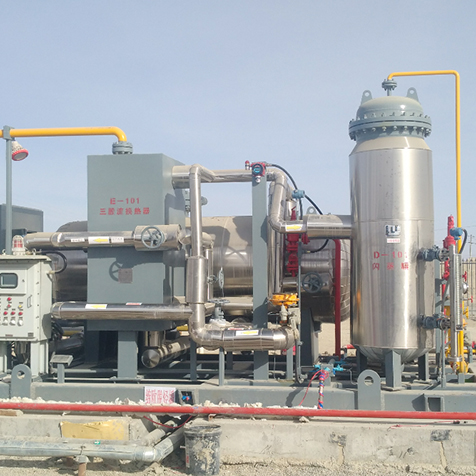
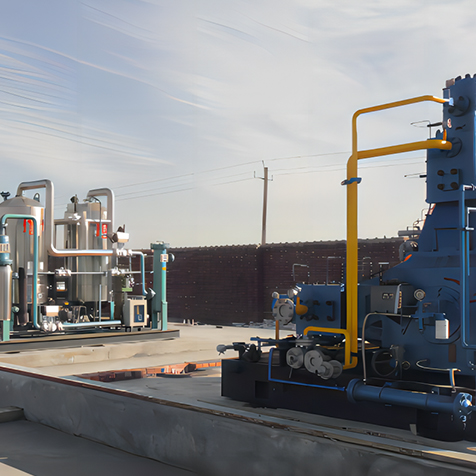
Overview:
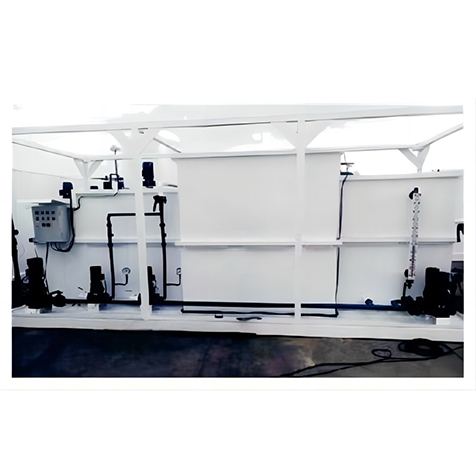
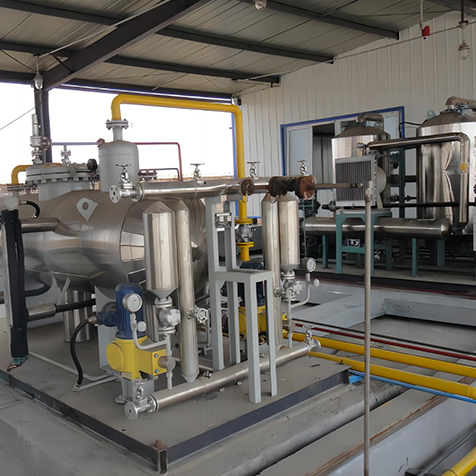
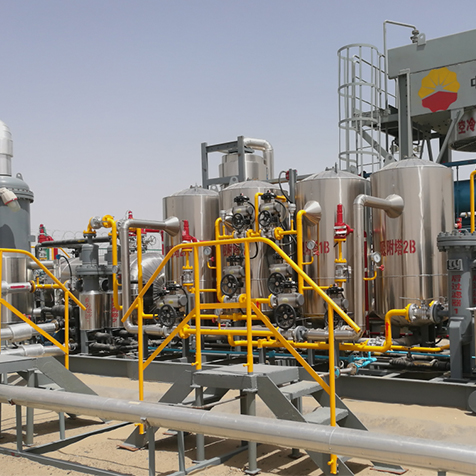
The associated gas dehydrocarbonization unit is commonly used in petroleum refining and natural gas processing. Its main function is to remove impurities and hydrocarbon compounds from crude oil or natural gas to improve product purity and meet specific quality standards.
Features:
Efficient removal of hydrocarbons: The primary goal is to remove unwanted hydrocarbons from the gas to enhance product purity. These units are designed to efficiently eliminate various hydrocarbons to ensure compliance with product specifications.
Multi-functionality: The unit may use a combination of technologies and processes, including physical adsorption, chemical reactions, and cooling. This versatility allows it to handle different types of crude oil and natural gas and address various hydrocarbon contaminants.
Strong adaptability: The unit is generally capable of adapting to different operating conditions and feedstock variations. It may have adjustment capabilities to cope with changes and fluctuations in crude oil or natural gas composition.
Catalytic reaction capability: Some units may include catalysts that convert unwanted hydrocarbons into more useful products via catalytic reactions, improving waste utilization and product quality.
Automated control system: Typically equipped with advanced automation systems for monitoring and adjusting the treatment process, ensuring efficient and stable performance under varying operational conditions.
Environmental protection and safety: Designed with environmental and safety considerations, including waste treatment systems and safety measures to prevent harmful gas leaks.
Highly customizable: Because crude oil and natural gas sources vary in composition and contaminants, these units often require customized designs tailored to specific industrial needs.
Process Flow:
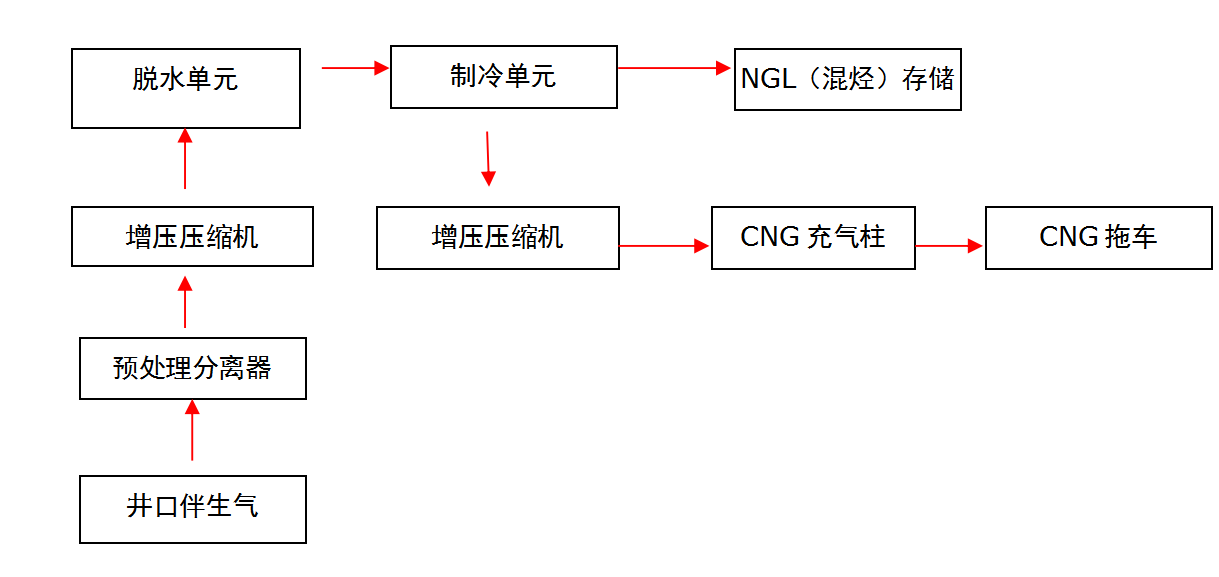
Associated gas from oil fields (0.01–0.2 MPa) is compressed by a natural gas compressor to 4.0 MPa, then cooled and separated via a cooler and separator at the compressor outlet. The gas then enters the dehydration and dehydrocarbonization modules for dehydration and hydrocarbon removal. After treatment, the natural gas is compressed to 20–25 MPa for loading into LNG trailers. The light hydrocarbons separated from the dehydrocarbonization module enter the light hydrocarbon storage tank module, then are pumped by the light hydrocarbon export pump into the loading module for transport.